

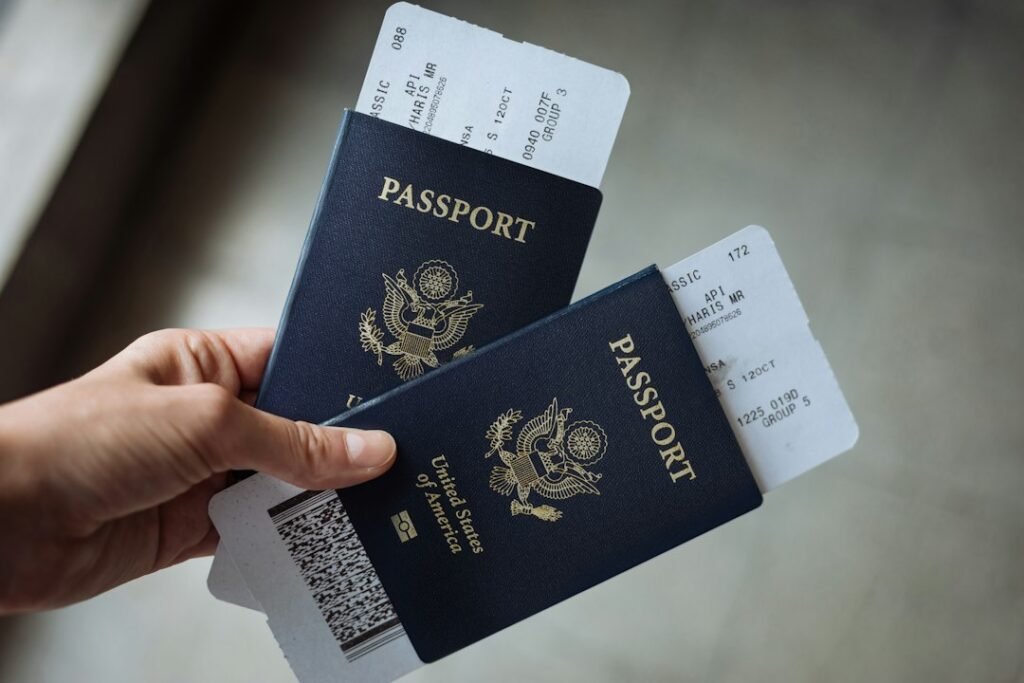
International travel usually requires more than a plane ticket and a valid identification card. For residents of Kansas City, MO, the essential documents generally include a passport, any required visa or electronic travel authorization, proof of onward travel when requested, and supporting records for children, health needs, or special circumstances.
Entry rules vary by destination and can change. Check the destination’s official government or embassy information and current U.S. Department of State guidance before each trip, rather than relying on requirements remembered from a previous visit.
What passport is needed for an international trip?
A valid U.S. passport book is the standard document for U.S. citizens traveling internationally by air. Infants and children need their own passports; they cannot travel internationally under a parent’s passport. A passport card is not valid for international air travel, although it may be accepted for certain land or sea crossings. ([help.cbp.gov](https://www.help.cbp.gov/s/article/Article-1467?language=en_US&utm_source=openai))
Before traveling, check:
- The passport is undamaged and signed.
- The name matches the airline reservation and other travel documents.
- There are enough blank pages if the destination requires visa stamps.
- The expiration date meets the destination’s rules.
Many countries require a passport to remain valid for six months beyond the planned trip. Some airlines may deny boarding if the passport does not meet that standard, even when the traveler’s return date is earlier. ([travel.state.gov](https://travel.state.gov/en/passports/after-you-apply/after-getting-passport.html?utm_source=openai))
Children’s passports have a shorter validity period. Passports issued to children under age 16 are valid for five years and cannot be renewed through the standard adult renewal process. Families should check expiration dates well before booking a trip. ([travel.state.gov](https://travel.state.gov/en/passports/apply/child/under-16.html?utm_source=openai))
Do you need a visa or electronic travel authorization?
A passport does not automatically provide permission to enter every country. Depending on the destination, trip length, purpose of travel, and nationality, a traveler may need:
- A traditional visa placed in the passport
- An electronic travel authorization
- A transit visa for a connecting country
- Proof of an approved online entry application
- A work, study, business, or residence permit
Tourist entry rules may not apply to people traveling for employment, education, journalism, volunteer work, medical treatment, or extended stays. A short airport connection can also create document requirements if the traveler must pass through immigration or change airports.
Review requirements for every country on the itinerary, including countries where a connection occurs. Use official government sources or the destination’s embassy or consular information. Approval notices should be saved in printed and electronic form if the destination issues them digitally.
Which supporting documents should travelers carry?
Supporting documents are not always requested, but they can help explain the purpose and conditions of a trip. Depending on the itinerary, carry copies of:
- Round-trip or onward travel reservations
- Lodging details or a host’s address
- Travel insurance information
- Proof of sufficient funds, if required
- A letter from an employer, school, or sponsoring organization
- Prescription records and medication documentation
- Emergency contact information
- A copy of the passport identification page
Some countries ask visitors to show proof of onward travel or a specific address after arrival. Border officials may also ask about the length and purpose of the visit. These documents do not replace a visa, but they can support an otherwise valid entry application.
Keep originals in a secure place and carry copies separately. The U.S. Department of State recommends making multiple copies, leaving one set with a trusted person, and storing secure photos of important documents on a phone or protected account. ([travel.state.gov](https://travel.state.gov/content/travel/en/international-travel/before-you-go/travelers-checklist.htmlhecklist.html?utm_source=openai))
What documents are needed when traveling with children?
Each child generally needs an individual passport for international air travel. Families should also carry proof of the parent-child relationship, such as a birth certificate or other official documentation. ([travel.state.gov](https://travel.state.gov/en/international-travel/planning/personal-needs/minors.html?utm_source=openai))
Additional paperwork may be necessary when:
- One parent travels without the other.
- A child travels with a grandparent, relative, coach, or other adult.
- A legal guardian is traveling with the child.
- Parents are separated or divorced.
- A court order affects custody or international travel.

Some countries may require a signed and notarized consent letter from the nontraveling parent or proof of sole legal custody. The United States does not require every minor to show both parents’ permission when departing, but another country may impose its own rule. Check the destination’s requirements before departure. ([travel.state.gov](https://travel.state.gov/en/international-travel/planning/personal-needs/minors.html?utm_source=openai))
A consent letter should identify the child, traveling adult, destination, travel dates, and contact information for the nontraveling parent or guardian. It should be consistent with any custody order and kept with the child’s other documents.
Are vaccination records or health documents required?
Health documentation depends on the destination and the traveler’s itinerary. Some countries recommend vaccines for health protection, while others require proof of specific vaccination as a condition of entry.
Yellow fever is a notable example. Certain countries may require an International Certificate of Vaccination or Prophylaxis, sometimes called a yellow card. Requirements can apply based on where a traveler is arriving from or where the traveler had a lengthy airport transit, not only on the final destination. ([cdc.gov](https://cdc.gov/vaccines/hcp/current-vis/yellow-fever.html?utm_source=openai))
A completed yellow fever certificate is generally valid for the lifetime of the traveler, although destination rules and medical circumstances still need to be checked. A medical waiver may not be accepted everywhere, so travelers who cannot receive a required vaccine should verify the destination’s policy well in advance. ([cdc.gov](https://cdc.gov/yellow-book/hcp/travel-associated-infections-diseases/yellow-fever.html?utm_source=openai))
Travelers who take prescription medication should keep medicine in its original labeled packaging and carry a copy of the prescription or a physician’s letter when appropriate. Medication laws differ internationally, and some commonly prescribed substances may be restricted abroad.
What documents are useful for dual citizens or permanent residents?
Dual citizens may need to enter or leave a country using that country’s passport. U.S. citizens must use a valid U.S. passport to enter the United States. A second passport may also be necessary for entry into the traveler’s other country of citizenship. ([travel.state.gov](https://travel.state.gov/en/international-travel/planning/personal-needs/minors.html?utm_source=openai))
Permanent residents of the United States should generally carry a valid passport from their country of citizenship and proof of U.S. permanent resident status when returning. Travelers should verify whether the green card, reentry permit, or other immigration document will remain valid for the entire trip.
A passport with a valid visa in an expired passport can sometimes still be used with a new passport, but the traveler should confirm this with the government that issued the visa. The old and new passports may need to be carried together. ([travel.state.gov](https://travel.state.gov/en/passports/after-you-apply/after-getting-passport.html?utm_source=openai))
How should documents be organized before departure?
Create a document folder at least several weeks before leaving. Include:
- Original passports and visas
- Printed copies of passport identification pages
- Printed entry approvals and reservations
- Child custody or consent paperwork, when applicable
- Vaccination certificates and medical documentation
- Emergency contacts and insurance details
Keep originals in a carry-on bag rather than checked luggage. Store paper copies separately from the originals, and protect digital copies with a device passcode or secure storage.
Travelers departing during severe weather or busy holiday periods should allow extra time for document checks and possible itinerary changes. A passport that is valid but does not meet the destination’s remaining-validity rule can still result in denied boarding, so document review should happen before the trip becomes difficult to change.